
Connect
© 2026 Kyekyekule Africa. All rights reserved.
kyekyekule.africa
© 2026 Kyekyekule Africa. All rights reserved.
kyekyekule.africa

Emmanuel Agyapong
Author
Published on:
October 31, 2026
Frederick Ebenezer Okai: Repair as an Ode to the Unearthed, curated by N’Goné Fall, explores themes of heritage, memory and repair, reflecting on what we preserve and how we reshape what we inherit.
The relationship between broken objects and collective memory forms the basis of Frederick Ebenezer Okai’s exhibition, Repair as an Ode to the Unearthed, at Nubuke Foundation in Accra. Working with ceramics, fragments and materials gathered from communities across Ghana, Okai considers how histories are preserved, how cultural differences can coexist and what it means to rebuild something that has been broken.
Drawing from Ghana’s pottery traditions, Okai combines low-fire ceramic techniques with finishing methods associated with indigenous pottery. His practice also considers the historical influence of British ceramic traditions in Ghana during the mid-1940s. Trained at the Kwame Nkrumah University of Science and Technology in Kumasi, he has gradually moved away from the rigid methods of academic training towards a more instinctive approach to making.

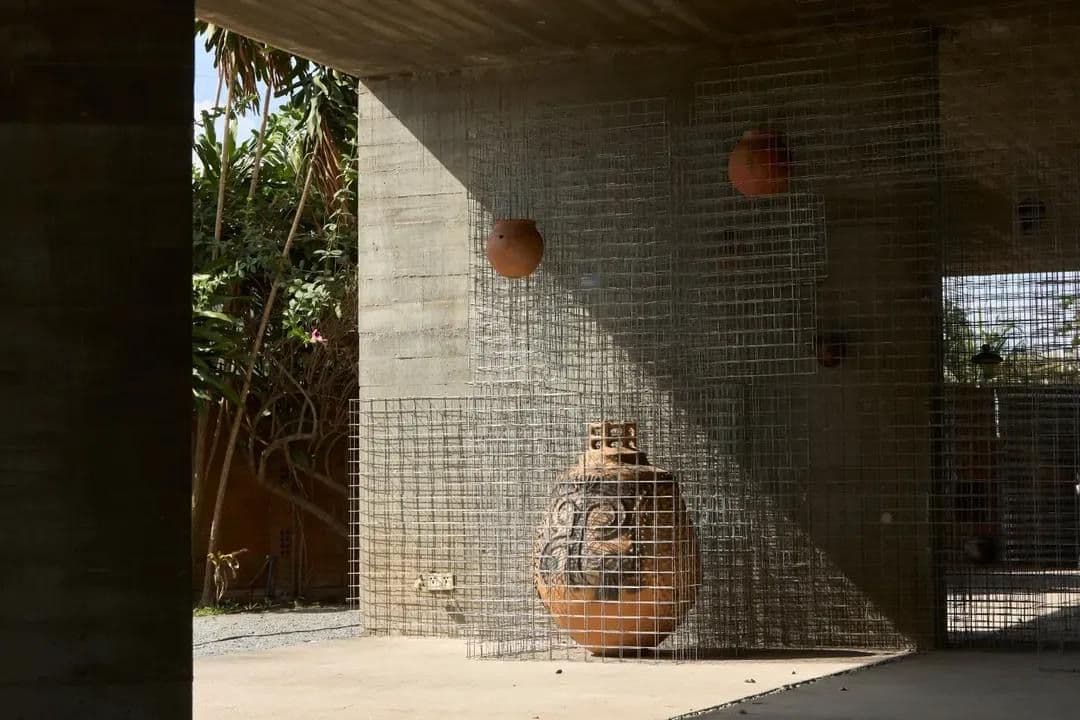
Installation on View: Frederick Ebenezer Okai: Repair as an Ode to the Unearthed at Nubuke Foundation. Image credit: Isaac Gyamfi A. Courtesy of Nubuke Foundation.
This shift followed visits to more than 30 pottery centres across Ghana. Through these encounters with local artisans, Okai recognised that much of the technical knowledge he had acquired through formal education, including an understanding of materials, chemistry and design, was already present in the working methods of traditional pottery communities. The experience changed how he approached his own practice, encouraging him to pay closer attention to local knowledge, making processes and the people behind them.
His travels have also influenced the materials and forms that appear in his sculptures. He collects fragments and other elements from the communities he visits, bringing them together in works that hold traces of different places and cultural experiences. Rather than treating these fragments as separate objects, he assembles them into compositions that allow different histories to exist alongside one another. In this sense, each work becomes a record of encounters across communities and a reflection on Ghana’s cultural diversity.
Repair is central to this process. Okai deliberately breaks or cuts ceramic forms before bringing their parts together again, using accessible materials such as glue and binding wire to reconnect them. The visible joins are not concealed. Instead, they remain part of the finished work, drawing attention to the act of restoration and the marks left behind by damage.

Installation on View: Frederick Ebenezer Okai: Repair as an Ode to the Unearthed at Nubuke Foundation. Image credit: Isaac Gyamfi A. Courtesy of Nubuke Foundation.
This approach is informed by the Japanese philosophy of wabi-sabi, which finds value in imperfection, simplicity and the effects of time. Its emphasis on accepting the marks and changes that objects acquire offers a way of understanding Okai’s interest in repair. His sculptures do not attempt to return broken forms to an untouched state. They preserve evidence of their separation while creating something new from the pieces.
The artist also draws on visual elements associated with traditional Ghanaian ceramics, including dotted patterns and other forms of decoration. Combined with fragments gathered from different locations, these details connect his work to wider histories of craft and cultural expression. His decision to loosen the precision of his forms, allowing his hands to respond more freely to the material, further reflects the influence of artisans whose methods prioritize direct engagement with the making process.

Installation on View: Frederick Ebenezer Okai: Repair as an Ode to the Unearthed at Nubuke Foundation. Image credit: Isaac Gyamfi A. Courtesy of Nubuke Foundation.
For Okai, the act of breaking and reassembling carries a wider meaning beyond the physical object. It becomes a way to reflect on the structures that shape society, the differences that exist within communities and the possibility of finding common ground. The works invite consideration of how people relate to shared histories and what may be required to move forward together.
Curated by N’Goné Fall, Repair as an Ode to the Unearthed forms part of Nubuke Foundation’s 20th anniversary program. The exhibition opened on Saturday, 17 October 2026, at the foundation’s space at 7 Lome Close, East Legon, Accra. Its opening program brought together visitors for an opportunity to meet the artist, alongside poetry, music, food and activities for children.
Through this exhibition, Okai places Ghanaian ceramic traditions in conversation with contemporary sculpture and ideas of repair. His works consider what communities inherit, what is lost or fragmented over time, and how different parts can be brought together without erasing their individual histories.
Frederick Ebenezer Okai: Repair as an Ode to the Unearthed, curated by N’Goné Fall, is on view at Nubuke Foundation, 7 Lome Close, East Legon, Accra, until 17 April 2027.
November 3, 2026

October 30, 2026
October 27, 2026

October 27, 2026